

Comparing the 2026 Hyundai Tucson to the 2026 Honda CR-V
Comparing the 2026 Hyundai Tucson to the 2026 Honda CR-V
Posted on March 31, 2026
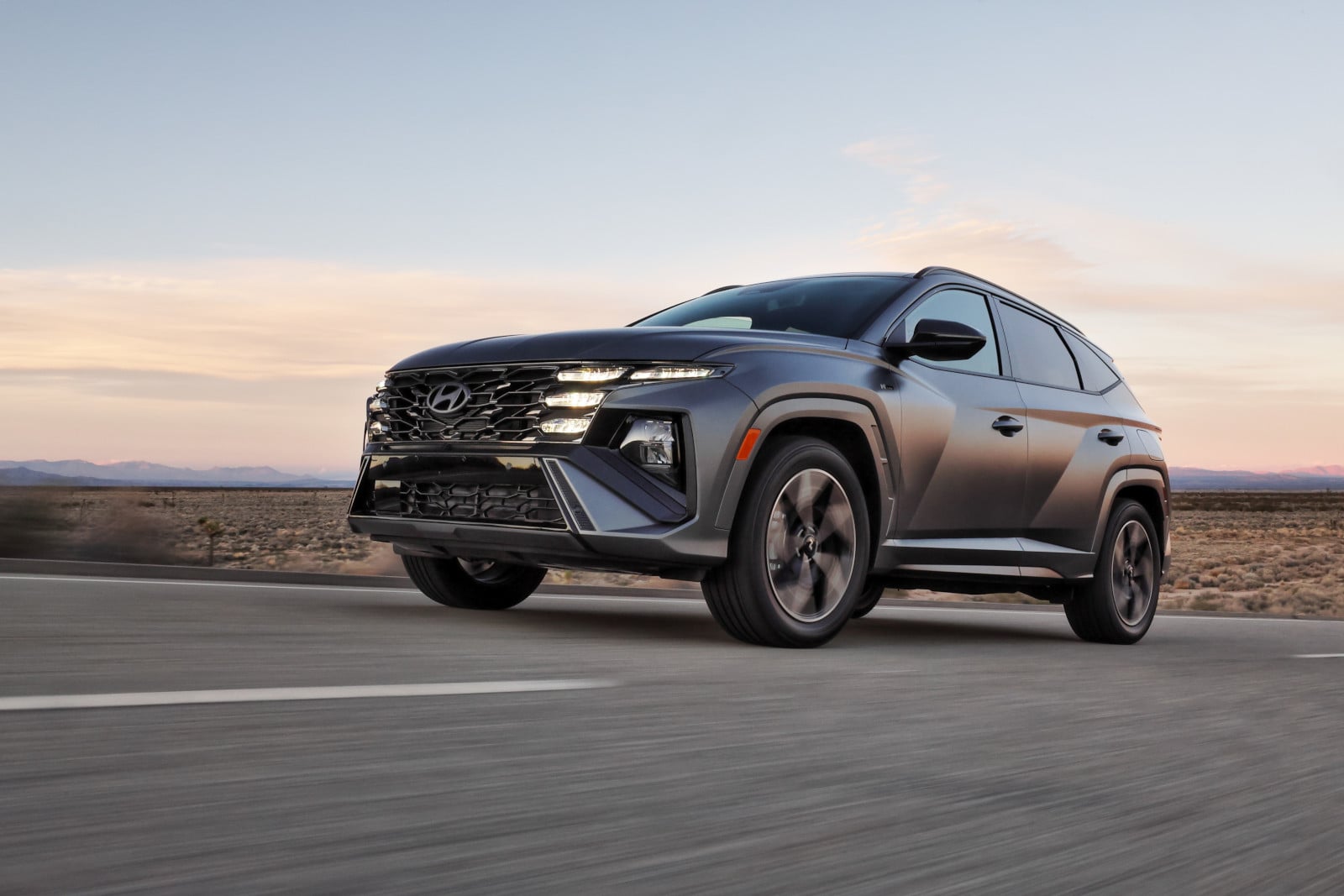
The 2026 Hyundai Tucson delivers three distinct powertrains and strong cargo flexibility for Alberta families. Against the Honda CR-V's hybrid-focused lineup, the Tucson offers more powertrain choice, significantly greater cargo capacity, and technology integration without subscription fees.
| Feature | 2026 Hyundai Tucson | 2026 Honda CR-V |
| Engine Options | 2.5L I4 / 1.6L Turbo Hybrid / 1.6L Turbo PHEV | 1.5L Turbo I4 / 2.0L Hybrid I4 |
| Power Output | 187-268 hp | 190-204 hp |
| Torque | 178-271 lb-ft | 179-247 lb-ft |
| Electric Range | Up to 51 km (PHEV) | - |
| Maximum Cargo Volume | 2,119 L | 1,113 L |
| Standard Technology | Wireless Apple CarPlay/Android Auto, OTA updates, Bluelink | Drive-by-Wire, hands-free tailgate |
Three Powertrains vs Two - Why Flexibility Wins
The Tucson offers a 187 hp 2.5L engine in Preferred and XRT trims, a 231 hp 1.6L turbo hybrid in N Line, and a 268 hp plug-in hybrid in top trim. The CR-V provides a 190 hp 1.5L turbo in LX and Sport variants, then shifts to a 204 hp 2.0L hybrid for remaining trims.
While the CR-V's hybrid achieves 6.4 L/100km combined, the Tucson PHEV covers daily commuting on electricity alone with 51 km electric range. For Edmonton buyers who charge overnight, that eliminates fuel costs for school runs and errands. The 13.8 kWh battery handles short trips emission-free, while the standard hybrid provides efficiency without charging infrastructure.
The CR-V locks buyers into Honda's hybrid system across four of six trims. The Tucson lets Alberta families choose powertrains matching their driving patterns - naturally aspirated reliability, self-charging hybrid efficiency, or plug-in electric-first flexibility.
The Cargo Capacity Gap That Changes Everything
The Tucson delivers 1,095 L behind the second row, expanding to 2,119 L with seats folded. The CR-V offers 1,028 L in hybrid trims and 1,113 L in turbo models - both with seats folded. The Tucson's 2,119 L maximum offers 90% more capacity than the CR-V's best figure.
For families traveling between Calgary and the mountains, that gap determines what fits without roof cargo. The Tucson accommodates four ski sets, winter gear, and a week's groceries in one load. The CR-V requires strategic packing or multiple trips. Even in PHEV configuration, the Tucson maintains over 900 L - competitive with the CR-V's maximum.
Technology That Works Without Subscription Walls
The Tucson includes wireless Apple CarPlay and Android Auto standard across all trims, paired with a 12.3-inch touchscreen and over-the-air updates through Bluelink. The CR-V requires physical connections for smartphone integration in lower trims.
Bluelink delivers remote start, vehicle health reports, and digital key functionality without monthly fees for three years. The CR-V's connected services require paid subscriptions after trial periods. The Tucson's wireless charging pad and head-up display keep phones charged and eyes forward without cables.
While the CR-V includes Traffic Jam Assist and Traffic Sign Recognition, the Tucson's Highway Driving Assist provides similar semi-autonomous capability. The Tucson adds Remote Smart Parking Assist and Bose Premium Audio in higher trims - features the CR-V reserves for top configurations or omits.
Where Safety Systems Align and Diverge
Both vehicles deliver comprehensive driver assistance as standard. The Tucson includes Forward Collision-Avoidance Assist, Blind-spot Collision Avoidance Assist, Rear Cross Traffic Avoidance Assist, Smart Cruise Control with Stop & Go, Safe Exit Warning, and Driver Attention Warning.
The CR-V counters with Honda Sensing: Collision Mitigation Braking, Adaptive Cruise Control, Lane Keeping Assist, Road Departure Mitigation, Blind Spot Information, and Cross Traffic Monitor.
The Tucson's Safe Exit Warning prevents doors from opening into oncoming traffic - critical for urban parking where cyclists share narrow streets. The Tucson adds Rear Occupant Alert and haptic steering wheel feedback for lane departure and collision warnings. While the CR-V displays speed limits via Traffic Sign Recognition, the Tucson's Intelligent Speed Limit Assist actively adjusts cruise control based on detected limits.
Power Delivery Across the Lineup
The Tucson's base 2.5L produces 187 hp and 178 lb-ft through an eight-speed automatic. The N Line hybrid delivers 231 hp and 271 lb-ft via a 1.6L turbo with electric assistance. The top PHEV pushes output to 268 hp while maintaining 271 lb-ft.
The CR-V's 1.5L turbo delivers 190 hp and 179 lb-ft, then shifts to the 204 hp hybrid producing 247 lb-ft across hybrid variants. While the CR-V's hybrid offers instant electric torque, the Tucson PHEV matches that responsiveness while adding 64 hp over the CR-V's peak.
For Alberta drivers merging onto Highway 2 at full load, the Tucson's 268 hp advantage delivers faster acceleration without downshifting. The CR-V's hybrid prioritizes efficiency over power, showing limitations when passing on two-lane highways.
HTRAC vs Real Time AWD - Handling Alberta Winters
The Tucson's HTRAC all-wheel drive includes driver-selectable Snow, Mud, and Sand modes. The CR-V's Real Time AWD adjusts torque automatically but lacks manual mode selection. Both send power rearward when front wheels slip, but the Tucson lets drivers pre-select winter settings.
For families heading to Jasper or Banff in winter, the Tucson's Snow mode adjusts throttle response and shift points before wheelspin occurs. The CR-V reacts after slip happens. The TrailSport Hybrid adds 208 mm ground clearance, positioning it closer to the Tucson for rutted forest roads.
What the Cabin Actually Delivers
The Tucson's panoramic sunroof comes standard on multiple trims, flooding both rows with natural light. The CR-V offers a one-touch moonroof covering front seats only. The Tucson's N Line adds sport seats with bolstering for aggressive cornering, while the CR-V's Sport focuses on exterior styling.
Both seat five with 60/40 split-folding rear seats and dual-zone climate control. The Tucson's acoustically laminated windshield reduces highway wind noise. The Tucson's wireless charging pad eliminates cable clutter, while the CR-V requires wired connections in most trims.
The Towing and Payload Reality
The CR-V's turbo variants handle 1,500 lbs (680 kg), while hybrids drop to 999 lbs (453 kg). The Tucson's specifications lack published towing figures in available documentation - buyers should consult Sherwood Park Hyundai for trailer capacity based on specific trims.
For families towing utility trailers or recreational equipment, the CR-V's 680 kg turbo rating covers lightweight gear. The hybrid's reduced capacity reflects Honda's two-motor system constraints. Buyers planning regular towing above 999 lbs (453 kg) should verify Tucson capabilities directly.
The Verdict for Alberta Families Who Need Cargo First
The 2026 Hyundai Tucson wins for buyers prioritizing cargo flexibility, powertrain choice, and technology without subscription fees. The 2,119 L maximum cargo capacity doubles the CR-V's offering, while the PHEV's 51 km electric range eliminates daily commuting fuel costs. Wireless smartphone integration, over-the-air updates, and three-year Bluelink access deliver modern convenience the CR-V gates behind upgrades or subscriptions.
While the CR-V achieves 6.4 L/100km in hybrid form, the Tucson's PHEV covers short trips on electricity - more valuable for Edmonton families charging at home who rarely exceed 40 km daily. The CR-V's 680 kg towing capacity serves weekend recreation, but the Tucson's 268 hp PHEV and 271 lb-ft deliver stronger highway passing power.
For maximum versatility in a compact SUV, the Tucson's cargo volume, electrification options, and standard technology resolve practical daily ownership trade-offs. Visit Sherwood Park Hyundai to experience the Tucson's cargo flexibility and confirm which powertrain matches your driving patterns.