

2026 Santa Fe Hybrid vs. Outlander PHEV: Cargo, Towing, and AWD for Alberta Families
2026 Santa Fe Hybrid vs. Outlander PHEV: Cargo, Towing, and AWD for Alberta Families
Posted on June 30, 2026
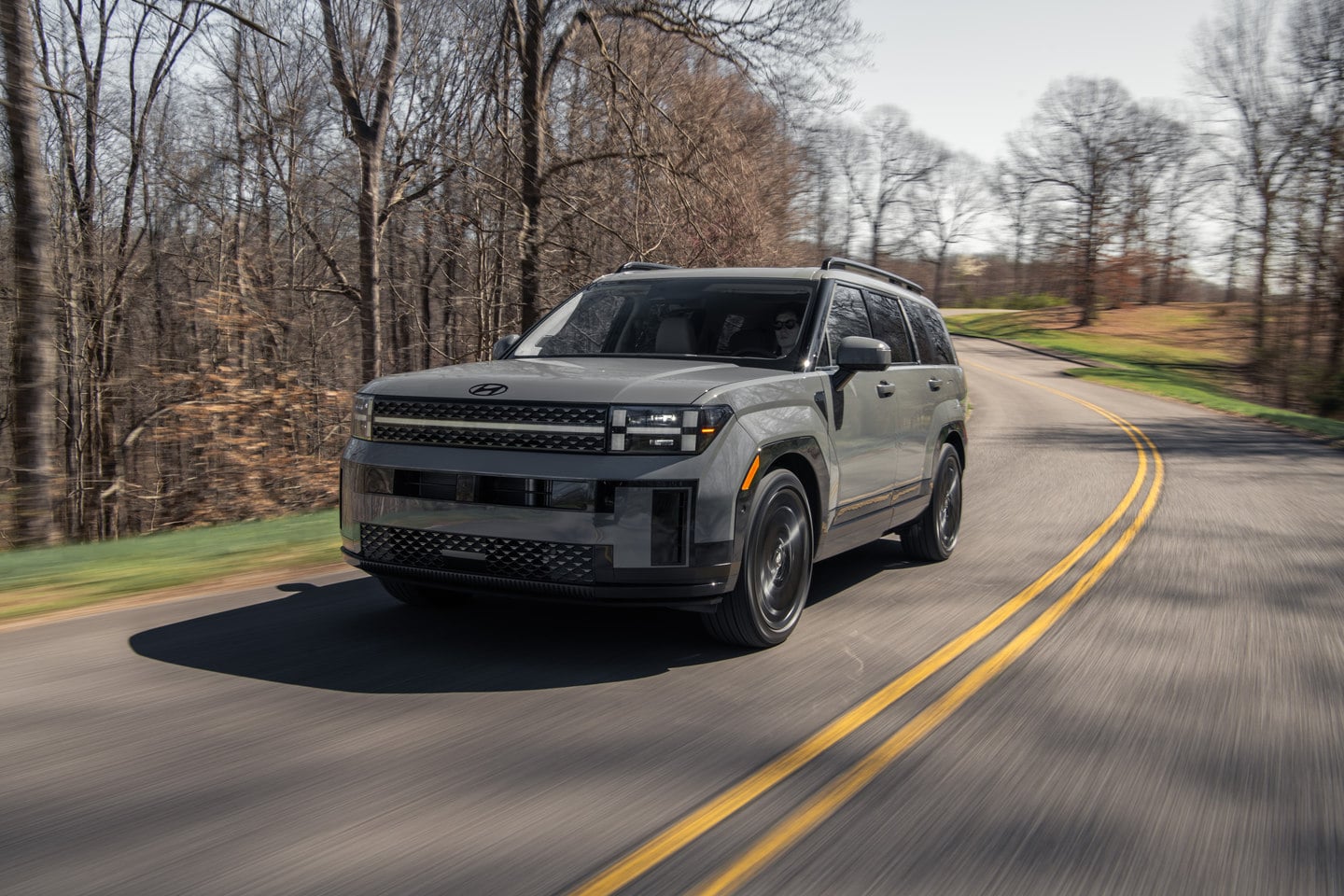
Alberta families comparing three-row hybrids often land on a central question: do you want a plug-in that rewards careful charging, or a hybrid that delivers efficiency every time regardless? The 2026 Santa Fe Hybrid and the 2026 Mitsubishi Outlander PHEV both offer AWD, three rows, and seven seats. But for most families, the Santa Fe delivers more cargo space, better gas-only efficiency, and stronger towing without any charging infrastructure required.
2026 Santa Fe Hybrid vs. Outlander PHEV: At a Glance
| Feature | 2026 Santa Fe Hybrid | 2026 Outlander PHEV |
| Engine | 1.6L Turbo 4-cyl HEV | 2.4L 4-cyl PHEV |
| System Output | 231 hp / 271 lb-ft | 248 hp / 332 lb-ft (POWER mode) |
| AWD System | HTRAC AWD | S-AWC |
| Combined Fuel Economy (gas) | 6.9 L/100km | 8.6 L/100km |
| EV Range | - | 72 km |
| Cargo Behind 3rd Row | 413 L | 362 L |
| Maximum Cargo (all rows folded) | 2,267 L | 1,832 L |
| Towing (braked) | 2,000 lbs (908 kg) | 1,499 lbs (680 kg) |
| Wheelbase | 2,815 mm | 2,705 mm |
| Hybrid Battery Warranty | 8 yr / 160,000 km | 10 yr / 160,000 km |
| Powertrain Warranty | 5 yr / 100,000 km | 10 yr / 160,000 km |
| Basic Warranty | 5 yr / 100,000 km | 5 yr / 100,000 km |
Powertrain and Everyday Efficiency
The Santa Fe Hybrid’s 1.6L turbocharged 4-cylinder works alongside a 59 hp electric motor for a combined 231 hp and 271 lb-ft of torque, delivered through a 6-speed automatic and HTRAC AWD. The 1.49 kWh lithium-ion battery self-charges through regenerative braking, so there is nothing to plug in.
The Outlander PHEV uses a 2.4L 4-cylinder producing 131 hp on its own, backed by twin electric motors (114 hp front, 134 hp rear) for a combined 248 hp and 332 lb-ft in POWER mode. Its 22.7 kWh battery enables 72 km of EV-only driving before the gas engine takes over. That is a genuine advantage for short daily commutes in Alberta, but once the battery depletes, gas-only consumption rises to 8.6 L/100km.
The Santa Fe delivers 6.9 L/100km whether the battery is charged or not. Families who regularly travel beyond the 72 km EV window, or who simply do not plug in consistently, will use more fuel in the Outlander PHEV than in the Santa Fe.
Cargo Space and Interior Room
Here the Santa Fe makes its most direct argument. With 413 L behind the third row and 2,267 L with all rows folded, it offers considerably more space than the Outlander PHEV’s 362 L and 1,832 L. The Outlander PHEV’s large 22.7 kWh battery pack occupies volume that the Santa Fe’s smaller hybrid battery does not.
The Santa Fe is also 110 mm longer overall (4,830 mm vs 4,720 mm) and rides on a 110 mm longer wheelbase (2,815 mm vs 2,705 mm). Third-row legroom in the Santa Fe measures 761 mm, a meaningful number for teenagers or adults on longer drives. When the third row is occupied and luggage needs to fit, the gap between 413 L and 362 L is not abstract, it is the difference between fitting the bags and leaving one on the driveway.
Across its four trims, the Santa Fe Hybrid offers 7-passenger seating on Preferred, Preferred with Trend Package, and Luxury, with a 6-seat captain’s chair configuration reserved for the Ultimate Calligraphy. Interior materials run from cloth (Preferred) through leatherette (Trend Package), leather (Luxury), and Nappa leather (Ultimate Calligraphy). The Outlander PHEV offers seven seats on every trim, with fabric at entry level, microsuede and synthetic leather in the middle, and leather-appointed seating from the SEL upward.
Towing and AWD Performance
The Santa Fe’s 2,000 lbs (908 kg) braked towing capacity is a clear advantage over the Outlander PHEV’s 1,499 lbs (680 kg). That 500 lb margin separates towing a small utility trailer or a loaded cargo carrier from being limited to very light loads. For Alberta families who connect a trailer even a few times a year, this matters.
Both vehicles run AWD as standard. The Santa Fe’s HTRAC system shifts torque distribution up to 50:50 front-to-rear and locks at 50:50 in Mud and Sand modes. The Outlander’s S-AWC uses the two electric motors to independently drive each axle, a genuinely capable approach for all-weather driving. Both systems are well-suited to year-round road conditions.
Which One Is Right for You?
If your family wants straightforward hybrid efficiency, no charging schedule, no range anxiety on longer trips, just consistent 6.9 L/100km fuel economy, the Santa Fe Hybrid is the clearer fit. Add 413 L of third-row cargo space, 2,000 lbs (908 kg) of towing capacity, and a longer cabin built on a 2,815 mm wheelbase, and the Santa Fe addresses the practical demands most Alberta families actually face.
The Outlander PHEV’s 72 km EV range and longer powertrain warranty are real benefits, but they depend on regular charging to deliver fuel savings and reward buyers with longer ownership horizons. Without consistent charging, its gas-only consumption of 8.6 L/100km erases the efficiency argument, and the Santa Fe’s cargo, towing, and interior space advantages remain in every scenario.
Your Next Step with the 2026 Santa Fe Hybrid
The 2026 Santa Fe Hybrid seats up to seven, delivers a consistent 6.9 L/100km combined, and brings 413 L of third-row cargo space and 2,000 lbs (908 kg) of towing capacity to every trim level.
Visit Sherwood Park Hyundai in Sherwood Park to explore the Santa Fe Hybrid lineup and book your test drive.