

2026 Hyundai Tucson vs 2026 Hyundai Kona: Key Differences
2026 Hyundai Tucson vs 2026 Hyundai Kona: Key Differences
Posted on March 30, 2026
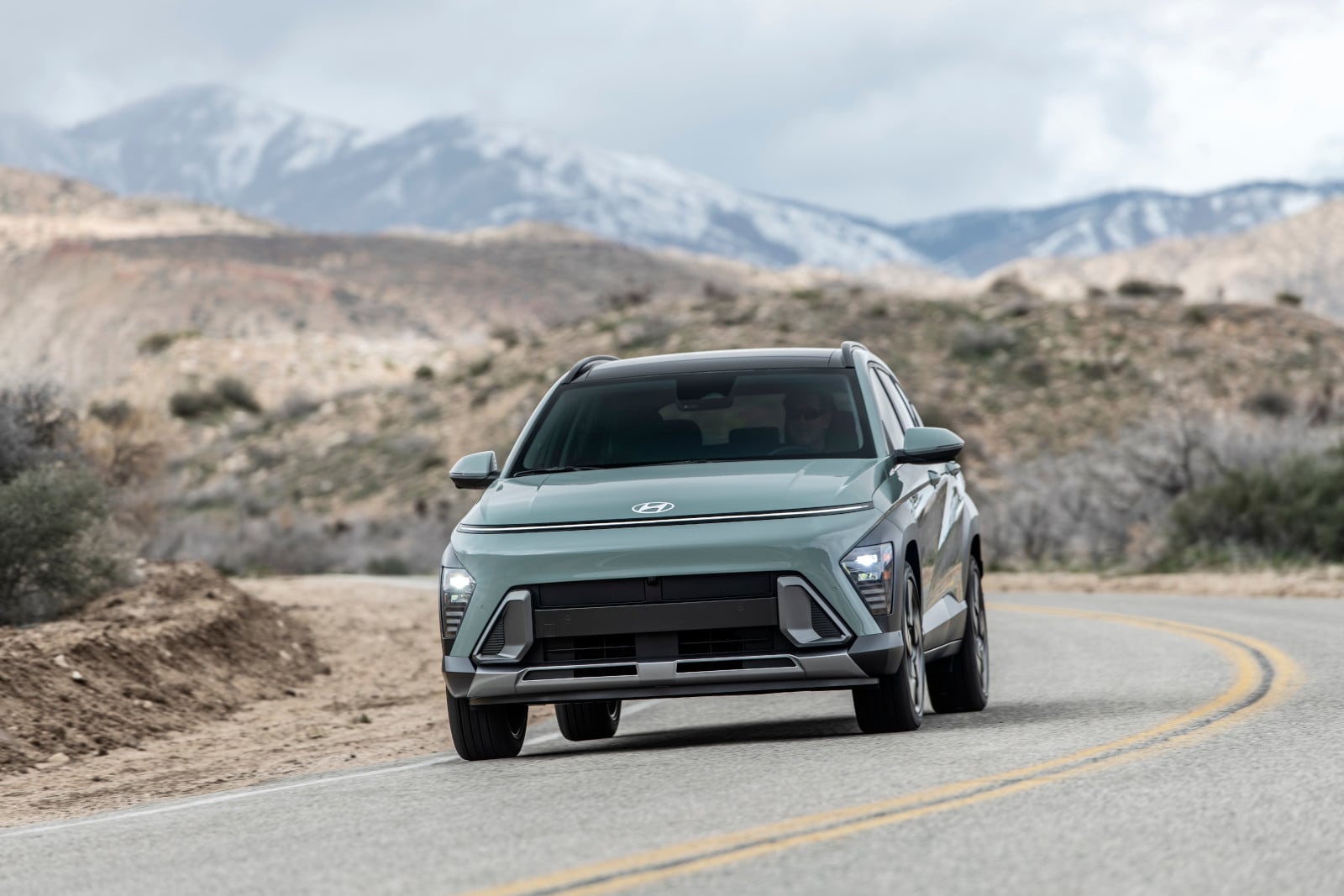
The 2026 Hyundai Tucson and 2026 Hyundai Kona both wear the same badge, but they answer different questions for Alberta drivers. The Tucson delivers more cargo capacity, towing capability, and three distinct powertrain options including a plug-in hybrid. The Kona counters with compact dimensions and fuel efficiency across its gasoline lineup. For buyers who need space to haul gear, tow recreational equipment, or run errands with electric-only range around Edmonton, the Tucson's versatility makes it the more practical choice.
| Feature | 2026 Hyundai Tucson | 2026 Hyundai Kona |
| Powertrain Options | 2.5L I4, 1.6L Turbo Hybrid, 1.6L Turbo PHEV | 2.0L I4, 1.6L Turbo, EV |
| Power Output | 187-268 hp | 147-201 hp |
| Cargo Volume (Behind Second Row) | 902-1,097 L | 723 L |
| Towing Capacity | 2,000-3,500 lb (907-1,588 kg) | Not rated |
| Fuel Economy (Combined) | 6.7-8.8 L/100km | 7.5-9.0 L/100km |
Three Powertrains vs One Platform Strategy
The Tucson offers three powertrain paths: a 2.5L Smartstream I4 producing 187 hp and 178 lb-ft in Preferred and Preferred with Trend Package trims; a 1.6L Turbo Hybrid delivering 231 hp and 271 lb-ft in the N Line; and a 1.6L Turbo Plug-in Hybrid generating 268 hp in the top trim with 51 km of electric-only range. The PHEV's 13.8 kWh battery charges in 2 hours on a Level 2 charger, covering typical Sherwood Park-to-downtown Edmonton commutes without burning fuel.
The Kona lineup separates into gasoline and electric variants. The 2.0L Essential and Preferred trims deliver 147 hp through an IVT transmission, achieving 7.5-8.6 L/100km combined depending on drivetrain. The N Line steps up to a 1.6L turbocharged engine paired with an 8-speed automatic, while the EV variant uses a 64.8 kWh battery with a 150 kW electric motor producing 201 hp. For buyers who want flexibility between gasoline, hybrid, and plug-in hybrid under one nameplate, the Tucson delivers all three without requiring a separate EV model.
Cargo Capacity for Alberta Weekends
The Tucson provides 902 L of cargo space behind the second row in PHEV configuration and 1,097 L in the Hybrid variant. That volume accommodates hockey gear for three players, camping equipment for weekend trips to Elk Island National Park, or building supplies from the hardware store. The Kona offers 723 L of maximum cargo volume - sufficient for groceries and daily errands, but limiting for buyers who regularly transport larger items.
For Alberta families who haul sports equipment, outdoor gear, or home improvement materials, the Tucson's cargo space advantage translates to fewer trips and more practical weekend capability. The difference matters when loading skis, snowboards, and winter camping gear for a Jasper trip or hauling mulch and garden supplies in spring.
Towing Capability the Kona Can't Match
The Tucson Preferred trim with the 2.5L engine tows up to 3,500 lb (1,588 kg), handling small camper trailers, utility trailers, or boat packages common across Alberta. The N Line Hybrid and top PHEV reduce that rating to 2,000 lb (907 kg) due to the hybrid powertrain architecture, still covering lightweight cargo trailers and jet ski packages. The Kona does not advertise towing capacity across its gasoline lineup.
For buyers who tow recreational equipment to Sylvan Lake, Pigeon Lake, or mountain destinations, the Tucson's factory-rated capability eliminates the need for a separate tow vehicle. Weekend warriors who trailer dirt bikes, ATVs, or small watercraft find the Tucson handles those loads without requiring a full-size truck.
Fuel Economy Trade-Offs Across Powertrains
The Tucson PHEV achieves 3.1 Le/100km combined electric-equivalent rating, with 6.7 L/100km fuel consumption when operating in hybrid mode after battery depletion - making it efficient for drivers who charge regularly. The 2.5L Preferred trim returns 8.8 L/100km combined, competitive for a compact SUV with AWD and towing capability. The Kona's 2.0L Essential FWD achieves 7.5 L/100km combined, while the N Line AWD with the turbocharged engine returns 9.0 L/100km.
While the Kona's gasoline models deliver slightly better combined fuel economy in direct comparisons (7.5-9.0 L/100km vs 8.8 L/100km for the Tucson's base engine), the Tucson PHEV's electric-only range covers daily commutes without using fuel at all - which matters more for Alberta drivers who charge at home and complete most trips within 51 km. The base Tucson accepts the modest fuel economy difference in exchange for more cargo space and 3,500 lb of towing capability.
Technology and Safety Across Both Lineups
Both vehicles include wireless Apple CarPlay and Android Auto, Bluelink Connected Car System with over-the-air updates, Forward Collision-Avoidance Assist with pedestrian and cyclist detection, Lane Following Assist, Lane Keeping Assist, Blind-spot Collision Warning, Rear Cross-Traffic Collision-Avoidance Assist, and Safe Exit Warning as standard equipment.
The Tucson adds a head-up display in higher trims and a Bose premium audio system in the top. The Kona top package includes Remote Smart Parking Assist, Surround View Monitor, and Blind View Monitor. For buyers prioritizing advanced driver assistance, both vehicles deliver Hyundai's comprehensive safety suite.
The Verdict for Alberta Families Who Haul and Tow
For Sherwood Park drivers who need cargo space for sports equipment, towing capability for recreational trailers, and the option of plug-in hybrid efficiency, the 2026 Hyundai Tucson delivers more practical versatility than the Kona. The 902-1,097 L cargo volume behind the second row handles weekend gear that won't fit in the Kona's 723 L capacity. The 3,500 lb towing rating covers camper trailers and boat packages the Kona can't pull. The PHEV's 51 km electric range eliminates fuel consumption on daily commutes while maintaining the flexibility of a gasoline engine for highway trips.
The Kona serves buyers who prioritize compact dimensions for urban parking and slightly better fuel economy in gasoline trims. But for Alberta families who regularly load hockey bags, camping gear, and building supplies - or who tow utility trailers and recreational equipment to lakes and mountain destinations - the Tucson's additional space and capability make it the more practical choice. Visit Sherwood Park Hyundai in Sherwood Park to compare both vehicles and confirm which configuration matches your cargo, towing, and powertrain priorities.